Hot Tub Health Benefits: Who They Help, When to Take Care and How to Bathe with Hydromassage
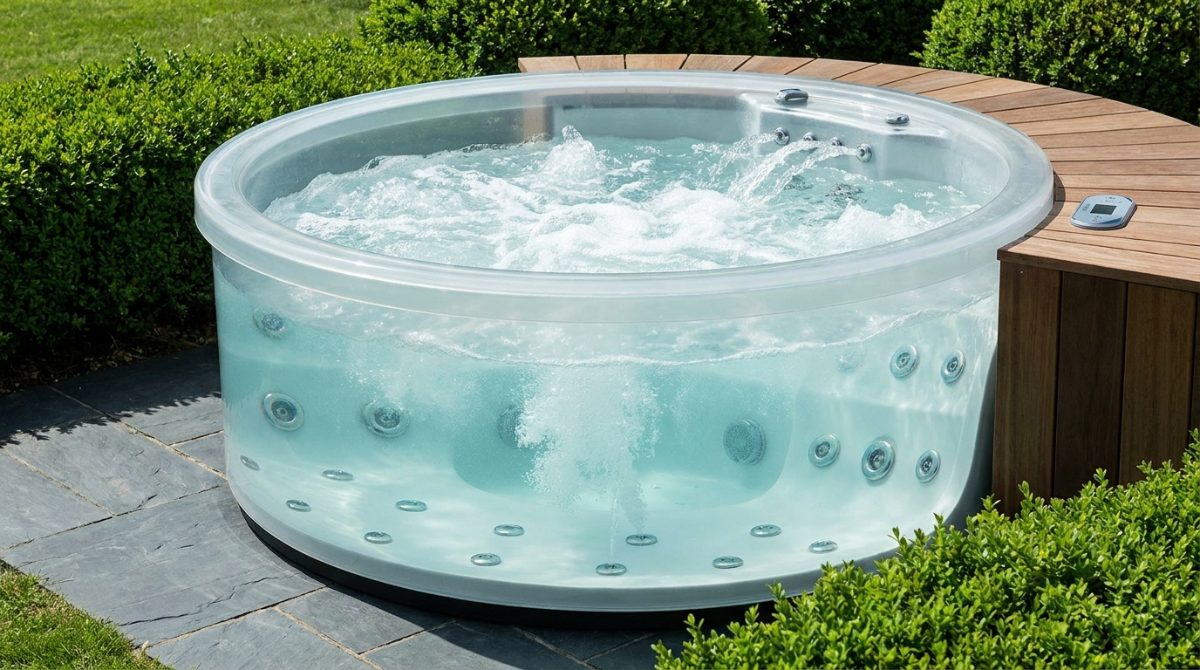
Hot tub health benefits are real, but narrower than advertising suggests. Warm water and hydromassage can ease muscle tension and lower back pain, make movement easier with osteoarthritis and shorten the time it takes to fall asleep. For most healthy adults, a safe framework is water at 37–40 °C and a soak of 15–20 minutes. Bathing does not replace exercise or medical treatment. Caution is needed with uncontrolled blood pressure and heart disease, during pregnancy, with diabetes and nerve damage, and after alcohol.
In brief
- Helps with: muscle tension and lower back pain, pain and stiffness with osteoarthritis, falling asleep. The effect lasts as long as you keep bathing regularly.
- How: a temperature of 40 °C at most, 15–20 minutes, shorter at the highest temperature. Before bed, one to two hours beforehand.
- With caution, after consulting a doctor: high blood pressure, heart disease, pregnancy, diabetes with neuropathy, fresh wounds, children.
- Does not: burn fat to any meaningful extent, or replace training or medical treatment.
This text is for information only and does not replace consultation with a doctor. If you have a chronic condition, discuss regular bathing in warm water with your treating physician.

What happens in the body in a hot tub
A hot tub is a domestic form of hydrotherapy. It acts through four physical effects at once. Most studies have examined warm water and spa therapy; the contribution of the jets on their own has been studied less.
Water pressure. Water presses on the body in proportion to depth, roughly 1 mmHg for every 1.36 cm. When you are immersed to the neck, central blood volume rises by about 0.7 litres and cardiac output by about 1.5 litres per minute (Becker, 2009). This is why caution is needed with heart disease.
Buoyancy. Water up to the navel supports roughly half of the body weight; up to the lower edge of the breastbone, 60% or more. The joints and spine are unloaded and movement is easier.
Heat. In water at 40 °C, core body temperature rises by approximately 0.05 °C per minute, or roughly 1 °C in 20 minutes (Becker, 2009). Blood vessels in the skin dilate and blood pressure usually falls.
Hydromassage. The stream of water and air adds a mechanical stimulus to the muscles. Jet types and their layout are described in the hydrotherapy entry of our glossary.
Who a hot tub helps: what the studies say
Lower back pain and muscle tension
A meta-analysis of five randomised trials found that spa therapy improved lower back pain by 26.6 mm on a 100 mm scale compared with a waiting list, and balneotherapy by 18.8 mm compared with a control group (Pittler et al., 2006). The authors rate the evidence as encouraging but limited.
An important distinction: balneotherapy uses mineral water within a spa programme. A home hot tub with ordinary water is not the same. The results indicate a direction, not a guarantee of the same effect.
Osteoarthritis of the knee, hip and hand
The 2019 guideline of the American College of Rheumatology and the Arthritis Foundation conditionally recommends thermal interventions (heat or cold) for a small improvement in pain and function (Kolasinski et al., 2020). A Cochrane review of seven studies with 498 patients found an improvement in pain with mineral baths that did not persist after three months, and rated the evidence as weak (Verhagen et al., 2007).
During an acute flare of an inflammatory condition such as rheumatoid arthritis, a rheumatologist decides whether heat is appropriate.
Falling asleep
A meta-analysis of 17 studies showed that a shower or bath at 40–42.5 °C one to two hours before bedtime shortens the time needed to fall asleep and improves sleep efficiency and subjective sleep quality. Even 10 minutes is enough (Haghayegh et al., 2019). According to the study authors, people fell asleep on average about 10 minutes faster.
The mechanism is thermoregulatory: after warming, blood shifts to the hands and feet, the body sheds heat faster and core temperature drops. This drop is the body’s signal for sleep. In a hot tub the ceiling of 40 °C applies; the setting for an evening soak is in the table below.
Recovery after sport
Warm water can reduce the feeling of muscle stiffness after exertion. If the aim is a recovery protocol alternating heat and cold, a comparison of heat and cold in water is in the article heated or cold plunge tub. Sauna use after training is covered in a separate article on sauna and post-sport recovery.
What a hot tub does not do
It does not burn fat to any meaningful extent. An hour in water at 40 °C raised energy expenditure by approximately 80% compared with rest, which according to the study author corresponds to about 140 kcal. An hour of cycling in the same study amounted to about 630 kcal (Faulkner et al., 2017). A half-hour soak therefore represents roughly 70 kcal.
It does not replace exercise. The higher cardiac output in water is passive and short-lived. It is not a training stimulus to which the heart and muscles adapt.
It does not replace treatment. It eases symptoms such as pain, stiffness or difficulty falling asleep. These return once regular bathing stops.
Hydromassage in a hot tub: temperature, duration and frequency by goal
| Goal | Water temperature | Duration | When and how often |
|---|---|---|---|
| Loosening the muscles after a sedentary day or exertion | 37–39 °C | 15–20 min | regularly during the week, jets on the lower back and shoulders |
| Soak before bed | up to 40 °C | 10–20 min | in the evening, 1–2 hours before bed |
| Gentle joint movement in water | 34–36 °C | longer, as tolerated | regularly, as a complement to exercise |
| Heat sensitivity, older age | 36–38 °C | shorter | with heart disease, as agreed with a doctor |
Why these values:
- 40 °C is the upper limit. The US Consumer Product Safety Commission (CPSC) states that hot tub water should never exceed 40 °C (104 °F). The Pool & Hot Tub Alliance (PHTA) recommends a range of 38–40 °C and a soak of 15–20 minutes.
- The warmer the water, the shorter the soak. Warmer water does not mean a stronger effect, only faster overheating.
- Longer immersion and movement need less heat. Therapy pools are kept at 33.5–35.5 °C precisely to allow long immersion and exercise (Becker, 2009).
- Regularity matters more than duration. There is no generally valid recommendation for frequency. Spa therapy studies used series of repeated baths over several weeks. Several shorter soaks during the week therefore make more sense than one long, hot one.

How to bathe with hydromassage, step by step
You will need a tub with heating and hydromassage, meaning jets and a pump, treated water, a glass of water and a towel. A tub with a wood-fired heater warms up in roughly 1–2 hours, depending on the starting water temperature and the size of the tub; for electric heating, the heat-up time is given on the product page of the specific model. Plan the heating in advance. A WiFi module lets you switch on the heating remotely and schedule it for the time of your soak.
Step 1: Check the water and temperature
Check the temperature on the control unit display, or with a thermometer on a tub without an electronic controller. With inadequate disinfection, the bacterium Pseudomonas aeruginosa can multiply in a hot tub and cause inflammation of the hair follicles (CDC). The CDC specifies for hot tubs free chlorine of at least 3 mg/l, bromine of 4–8 mg/l and pH 7.0–7.8. Cloudy water or foam indicates that the water needs treatment. Measurement and treatment are described in the article hot tub maintenance step by step. Drink some water before bathing.
Step 2: Set the temperature to suit the goal
Choose the temperature according to the table above. With a volume of 750–2,100 litres, changing the temperature is not a matter of minutes, so set it well in advance.
Step 3: Get in slowly
Enter the water gradually and sit for the first few minutes without the jets. Water pressure increases the volume of blood in the chest, and the body needs a moment to adjust to this change.
Step 4: Switch on hydromassage at a lower intensity
Direct the stream at the areas you want to loosen, most often the lower back, shoulders and calves. The massage should not hurt. Drawing air into the stream increases the perceived intensity but also cools the water slightly.
Step 5: Keep to the soak duration
At 37–40 °C, stay in for 15–20 minutes; at 40 °C, preferably less. End the soak immediately if you feel dizziness, nausea, palpitations or excessive drowsiness.
Step 6: Stand up slowly and rehydrate
Blood pressure falls in the water, so stand up slowly and hold on as you get out. Dry off and drink fluids. If you are going to sleep afterwards, give the body time to cool down first.
Step 7: Repeat regularly
Build the soak into your week at the rhythm given for your goal in the table, not sporadically.

Safety: when caution or a doctor is needed
High blood pressure. In a study of 21 patients with treated hypertension, systolic pressure fell on average from 144 to 122 mmHg after 10 minutes in water at 40 °C. No one reported dizziness, chest pain or palpitations. The authors conclude that a 10-minute soak is probably safe when blood pressure is controlled with medication (Shin et al., 2003). With untreated blood pressure or heart disease, consult a doctor before use (PHTA).
Pregnancy. In a cohort of 23,491 women, hot tub use in the first trimester was associated with an approximately threefold relative risk of neural tube defects in the foetus (RR 2.9; 95% CI 1.4–6.3; Milunsky et al., 1992). The CPSC warns that water above 38.9 °C (102 °F) can harm the foetus in the first three months. A conservative approach: do not use a hot tub in the first trimester, and decide on later use together with your doctor.
Diabetes with nerve damage. With neuropathy, a person may not reliably feel that the water is too hot. The NIDDK recommends checking water temperature with a thermometer or the elbow. In a hot tub, rely on the display, not on sensation.
Wounds, skin infections, recent surgery. A doctor decides when it is safe to return to the water.
Alcohol and medication that causes drowsiness. The CPSC warns that drowsiness after alcohol can lead to unconsciousness and drowning. Do not enter the water after drinking alcohol.
Children. The CPSC advises particular caution with young children, and the PHTA advises never leaving children unsupervised near a hot tub. The specific temperature and time for children are set by the manufacturer’s instructions and a paediatrician.
Hot tub health benefits at a glance: who can use it, who should take care
| Situation | What the evidence says | Practical recommendation |
|---|---|---|
| Muscle tension, lower back pain | Improvement in pain with spa therapy (Pittler 2006), limited evidence | Regular soak at 37–39 °C as a complement to exercise |
| Osteoarthritis | Thermal interventions conditionally recommended for a small improvement (ACR/AF 2019) | Joint movement in water at 34–36 °C; during an inflammatory flare, consult a doctor |
| Falling asleep | A bath 1–2 h before bed shortens the time to fall asleep (Haghayegh 2019) | Shorter soak at up to 40 °C in the evening |
| Treated hypertension | 10 min at 40 °C without adverse symptoms (Shin 2003) | Shorter soak, stand up slowly |
| Untreated hypertension, heart disease | Water pressure increases blood volume in the chest (Becker 2009) | See a doctor first |
| Pregnancy, first trimester | Higher risk of neural tube defects (Milunsky 1992) | Do not use a hot tub |
| Diabetes with neuropathy | Reduced perception of heat (NIDDK) | Check the temperature on the display, consult a doctor |
| Weight loss | About 140 kcal per hour (Faulkner 2017) | Not a weight-loss tool |
What matters in a tub intended for recovery
Recovery requires stable conditions, not a one-off effect. When choosing a tub, look at four things.
Stable temperature. Controlled conditions mean a temperature you can set and maintain. Electric heating holds the temperature between soaks, for example on the Nordic Halo model. In winter, the tub must be drained; water may be left in it during frost only if it is kept warm by electric heating, and a tub with a wood-fired heater is always drained in freezing conditions (procedure in the article hot tub in winter). On tubs with electronic control, a Balboa control unit monitors temperature, filtration cycles and safety functions.
Depth and seating. The tubs we offer are 95 cm deep, which allows immersion to the shoulders when seated. The Nordic Ember model has four seated positions and one reclining position.
Jets as an option, not a given. Hydromassage is part of the tub configuration. Its effect depends on the type of jets and the shape of the seat, not on their number. If the main aim is falling asleep or taking load off the joints, temperature and depth matter most.
Water hygiene. Acrylic is non-porous and does not absorb dirt. An ozone generator and UV-C sterilisation reduce the consumption of disinfectant chemicals, but do not replace them entirely.
Technical parameters of individual models, including those with electric heating for year-round use, are listed in the hot tubs category. For heating, jet type and equipment, we prepare the configuration on request via the contact page.
You may also be interested in
- Outdoor sauna or hot tub: what to buy first
- Hot tub maintenance step by step
- Sauna and muscle recovery after sport
Sources
- Becker BE. Aquatic therapy: scientific foundations and clinical rehabilitation applications. PM&R. 2009;1(9):859–872. DOI: 10.1016/j.pmrj.2009.05.017
- Pittler MH, Karagülle MZ, Karagülle M, Ernst E. Spa therapy and balneotherapy for treating low back pain: meta-analysis of randomized trials. Rheumatology. 2006;45(7):880–884. DOI: 10.1093/rheumatology/kel018
- Kolasinski SL, et al. 2019 American College of Rheumatology/Arthritis Foundation Guideline for the Management of Osteoarthritis of the Hand, Hip, and Knee. Arthritis & Rheumatology. 2020;72(2):220–233. DOI: 10.1002/art.41142
- Verhagen AP, et al. Balneotherapy for osteoarthritis. Cochrane Database of Systematic Reviews. 2007;(4):CD006864. DOI: 10.1002/14651858.CD006864
- Haghayegh S, et al. Before-bedtime passive body heating by warm shower or bath to improve sleep: A systematic review and meta-analysis. Sleep Medicine Reviews. 2019;46:124–135. DOI: 10.1016/j.smrv.2019.04.008
- Shin TW, Wilson M, Wilson TW. Are hot tubs safe for people with treated hypertension? CMAJ. 2003;169(12):1265–1268. PubMed 14662661
- Milunsky A, et al. Maternal heat exposure and neural tube defects. JAMA. 1992;268(7):882–885. PubMed 1640616
- Faulkner SH, Jackson S, Fatania G, Leicht CA. The effect of passive heating on heat shock protein 70 and interleukin-6: A possible treatment tool for metabolic diseases? Temperature. 2017;4(3):292–304. DOI: 10.1080/23328940.2017.1288688
- U.S. Consumer Product Safety Commission: CPSC Warns of Hot Tub Temperatures
- Pool & Hot Tub Alliance: Hot Tub Safety
- CDC: Preventing Hot Tub Rash
- NIDDK: Diabetes & Foot Problems