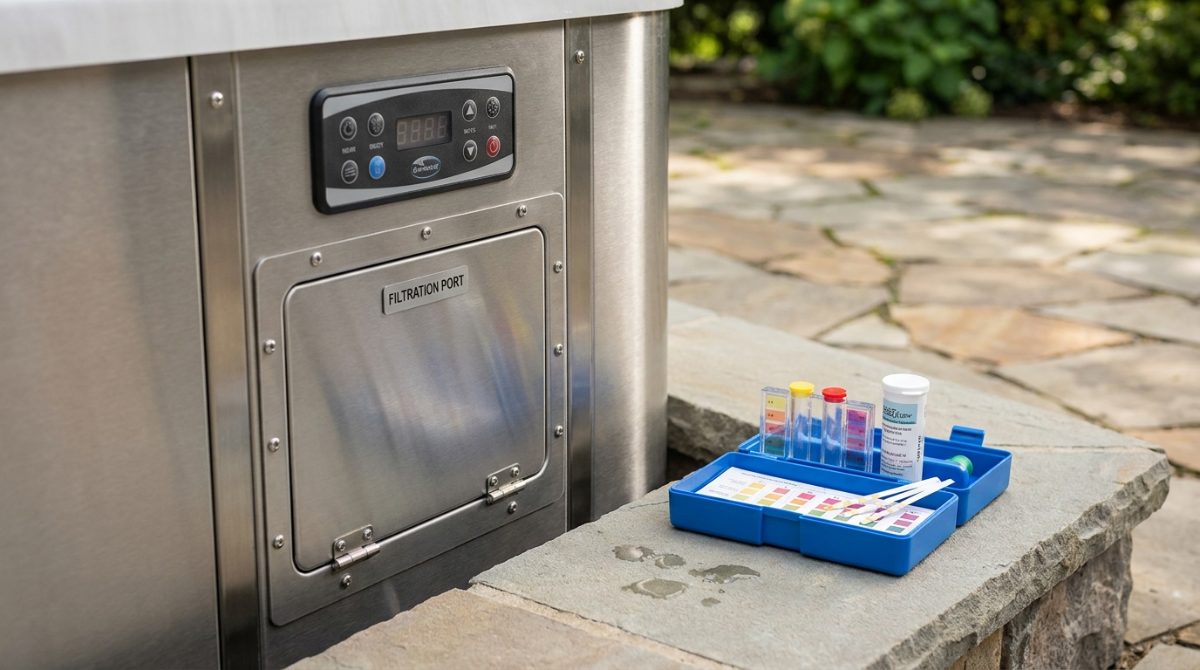
An outdoor hot tub is an investment with operating demands that cannot be ignored. Neglecting regular maintenance leads to water degradation, damage to the filtration system, early replacement of the acrylic shell or jets, and, in extreme cases, health risks from the growth of pathogenic microorganisms. This guide breaks the tasks down by frequency, describes the correct chemical balance of the water, and sets out the parameters at which operating a hot tub is hygienically safe.
Hot tub chemicals only work when applied in the right order, at the right pH, and at the right intervals. The most common mistake owners make is a reactive approach — adding chlorine or bromine only after the water has already deteriorated. A preventive system is technically simpler and cheaper: regular measurement, small-scale corrections, and mechanical filtration ahead of chemical treatment.
Correct hot tub chemistry also extends the life of seals, jets, and heating elements. Aggressive pH or an excessive sanitiser concentration accelerates corrosion of metal components and degradation of the acrylic surface.
The weekly cycle is the foundation of stable operation. Each week, owners should carry out the following steps in order:
1. Measuring water parameters
Basic parameters are measured using test strips or a digital tester:
2. Adjusting pH
pH is corrected before any other chemical. Sulphuric acid or sodium bisulphate (pH Minus) is used to lower it; sodium carbonate (pH Plus) to raise it. A correction of more than 0.5 pH units should be split into two steps, 4 hours apart.
3. Dosing the sanitiser
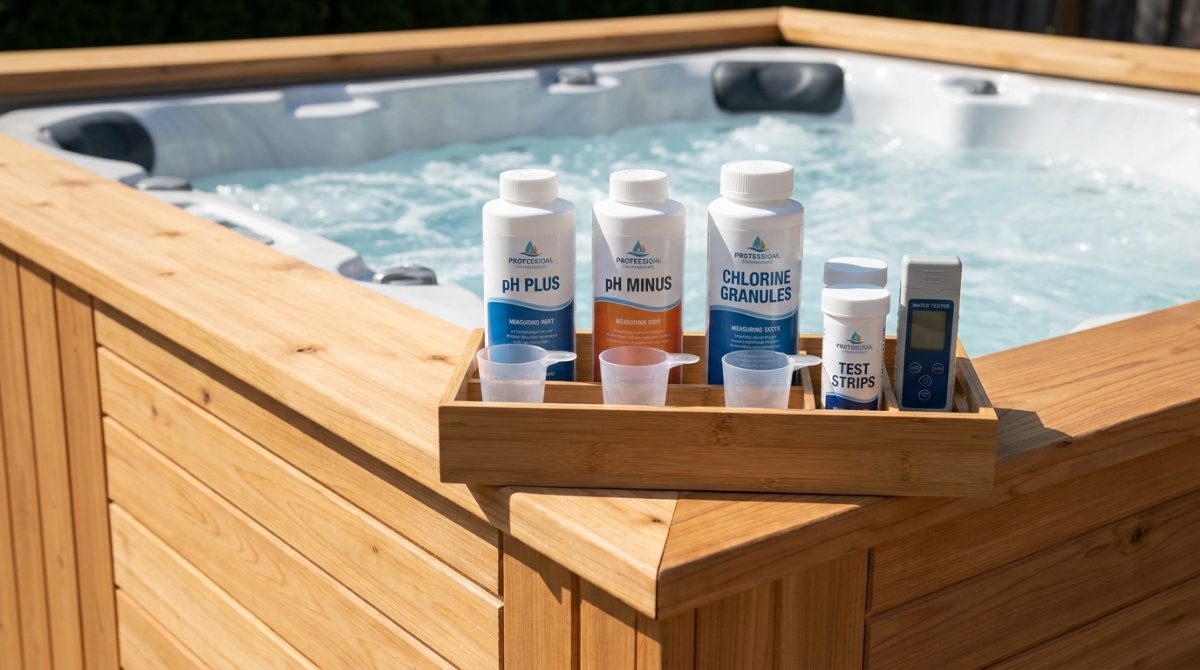
Chlorine is added in the evening, when the hot tub is not in use. Granules should be pre-dissolved in a bucket of water rather than poured in directly. Shock treatment — a single dose of 5–10 mg/l — is carried out after any period of heavier use (more than 4 people at once) or after an extended break.
4. Cleaning the filter
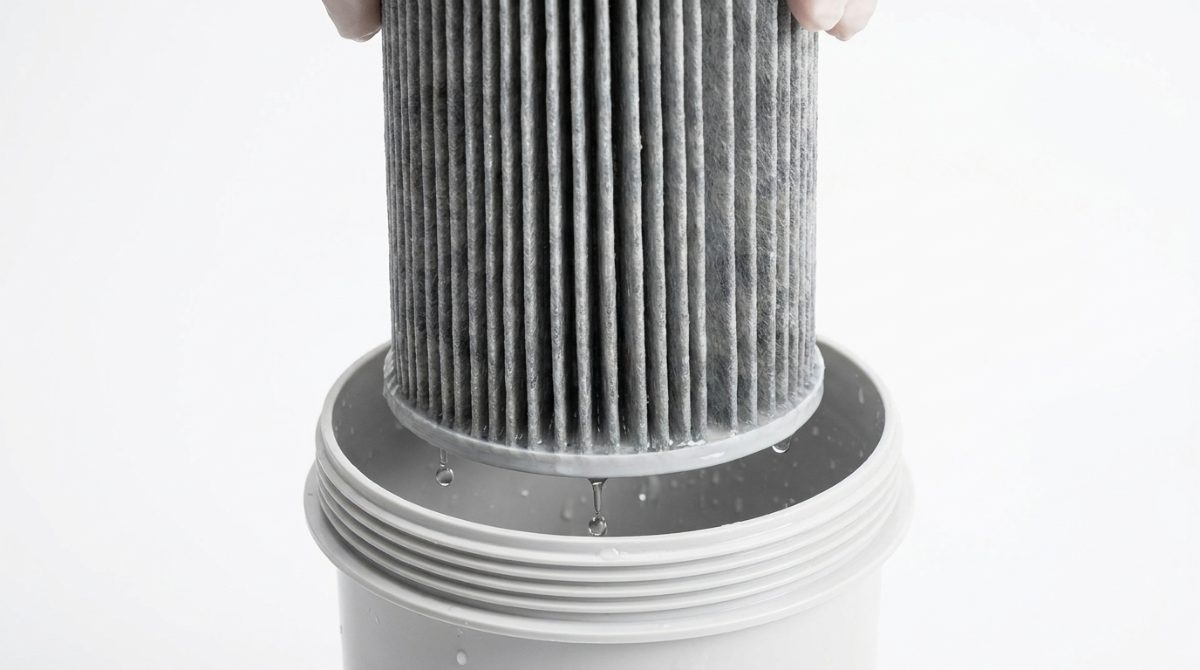
The filter cartridge is rinsed with clean water (never soap or detergents). Weekly rinsing releases trapped debris; chemical cleaning is needed once a month.
Chemical filter cleaning
The cartridge is soaked for 12 hours in a solution of a dedicated filter cleaning product. After cleaning, the filter must be rinsed thoroughly with clean water before being reinstalled, since residue from the cleaning product would cause foaming.
Checking cyanuric acid (CYA) levels
CYA stabilises chlorine against UV breakdown. Its optimal concentration is 20–50 mg/l. At higher levels (above 80 mg/l), so-called chlorine lock occurs — the sanitiser is technically present but biologically ineffective. The only correction is a partial water change.
Checking the water level and topping up
Evaporation, splashing, and water carried out on bathers’ bodies lowers the level in the shell. Water below the minimum operating level damages the pump. Top-ups should be done with fresh water, followed by a fresh round of parameter testing.
Cleaning the waterline
A biofilm made up of sunscreen, oils, and organic matter builds up at the waterline. It is removed using a dedicated waterline cleaning product. An ignored biofilm becomes a source of bacteria resistant to a standard sanitiser dose.
Filter replacement
If the filter cartridge has lost its fibre structure, shows visible cracks, or fails to return to its off-white colour after chemical cleaning, it needs to be replaced. Recommended cartridge lifespan: 12 months under intensive use, 24 months under occasional use.
Full water change
A complete water change is needed once TDS (total dissolved solids) exceeds 1,500 mg/l. Water that is “exhausted” by chemicals, minerals, and organic matter no longer responds properly even to increased sanitiser doses.
Winterising an outdoor hot tub
Unless the hot tub is kept heated year-round, winterising is a critical step. Water that freezes inside the pipework or pump causes mechanical damage in the form of cracks, which cost thousands of euros to repair.
Winterising procedure:

| Product | Function | Frequency |
|---|---|---|
| Chlorine (granules/tablets) | Primary sanitation | Weekly dosing |
| Bromine tablets | Alternative sanitation for sensitive skin | As needed |
| pH Plus / pH Minus | Acidity/alkalinity correction | Based on testing |
| Alkalinity Increaser | Stabilising buffer capacity | Monthly |
| Calcium Hardness Up | Adjusting water hardness | Based on testing |
| Filter cleaner | Chemical regeneration of the cartridge | Monthly |
| Shock treatment (oxidiser) | Breaking down organic matter | After heavy use |
| Waterline cleaner | Removing biofilm | Monthly |
Mixing chemicals before dissolving. Never add chlorine and a pH corrector to the water at the same time. Chemicals should always be pre-dissolved separately.
Testing immediately after adding chemicals. Parameters should be measured at least 30 minutes after adding any product and after the circulation pump has run.
Ignoring foam. Persistent foam indicates a high concentration of organic matter. Treating it with an anti-foam product addresses the symptom; the cause (a water change or shock treatment) must still be dealt with.
Adding chemicals with the circulation pump off. Chemicals need to be distributed by the pump. A concentrated dose in one spot damages the acrylic.


We're happy to help personally. Leave us your contact, or write or call us:
+421 940 916 815 info@luxurelax.sk