Running an outdoor sauna in winter isn’t a compromise — it’s a standard operating scenario that a well-designed structure is built to handle. The difference between summer and winter operation mainly shows up in pre-heating time, energy consumption, and the demands placed on the shell’s insulation. This guide covers the technical parameters of winter operation, energy efficiency, and protecting the structural components from cyclical freezing.
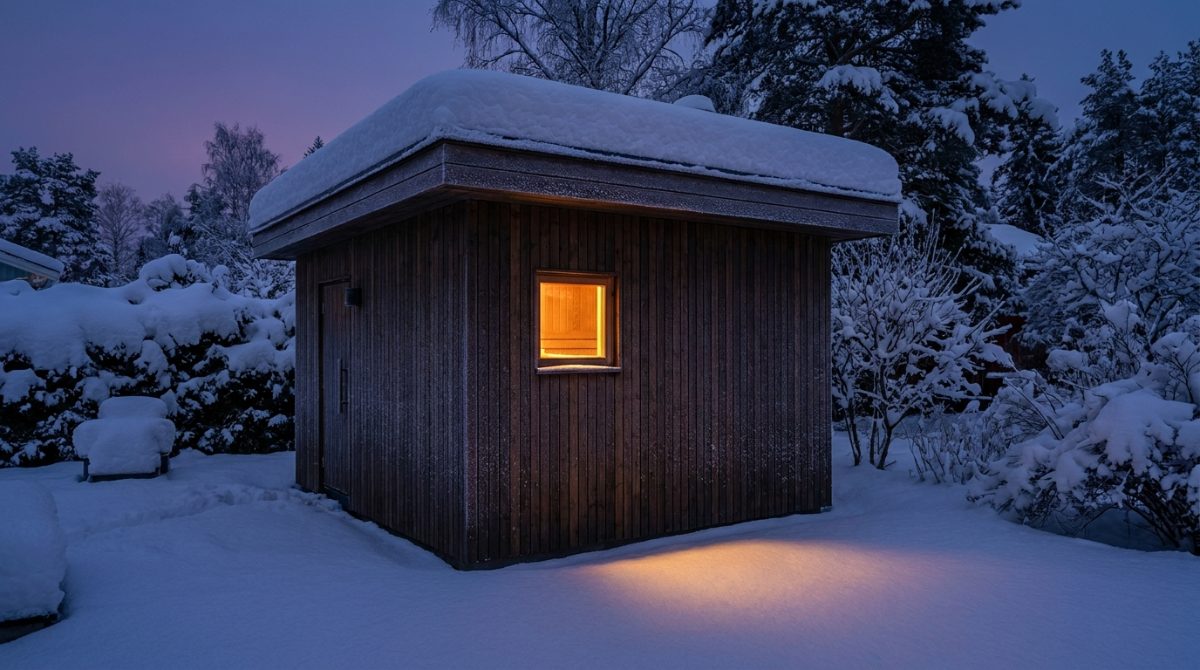
In winter, an outdoor sauna works with a temperature gradient of 100–130 °C between the interior (80–100 °C) and the exterior (−20 °C to −10 °C). Quality saunas use 70–150 mm of mineral wool insulation with a λ-value of 0.035–0.040 W/(m·K). At a thickness of 100 mm and an outdoor temperature of −15 °C, heat flux through the wall is 5–7 W/m². The total heat loss of a well-insulated sauna (12–15 m²) doesn’t exceed 1.5–2 kW at steady state. Door seals must be made of EPDM rubber rated down to −40 °C.
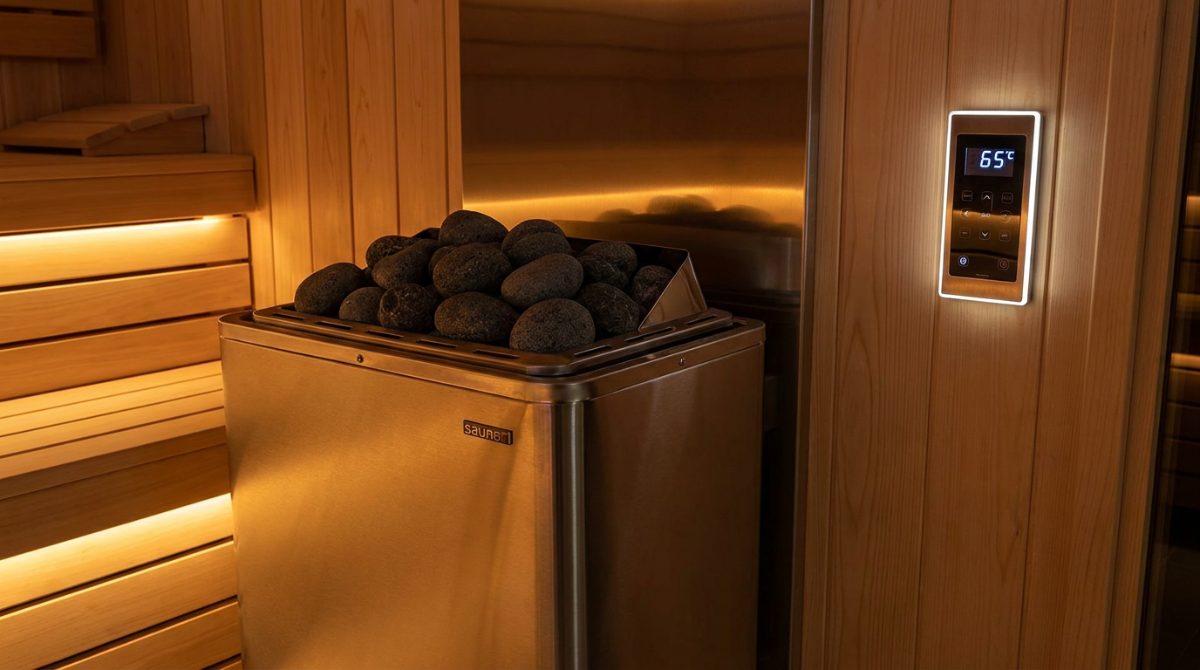
Pre-heating time in winter increases by 30–60% compared to summer conditions. With a 9 kW electric heater and an outdoor temperature of −10 °C: pre-heating takes 35–50 minutes. With a 12 kW heater, 20–35 minutes. Wood heating requires 45–75 minutes depending on the wood species and moisture content of the fuel. A sauna with 100 mm of insulation takes 20–30% longer to pre-heat than in summer; a sauna with 50 mm of insulation, up to 40–50% longer.
| Scenario | Pre-heat | 90-min maintenance | Total/session |
|---|---|---|---|
| Summer (+15 °C), 9 kW | 3.5 kWh | 4.5 kWh | 8 kWh |
| Winter (−5 °C), 9 kW | 5 kWh | 6.5 kWh | 11.5 kWh |
| Winter (−15 °C), 9 kW | 6.5 kWh | 8 kWh | 14.5 kWh |
A thermal curtain in front of the door reduces heat loss during opening by 30–50%. Smart controllers with pre-programmed pre-heating ensure the sauna reaches operating temperature exactly on schedule. The optimal operating temperature in winter is 80–90 °C — not 100 °C, which increases heat loss exponentially. Triple-glazed windows (Ug = 0.6–0.7 W/m²K) reduce heat loss through the window by 85% compared to standard single glazing.
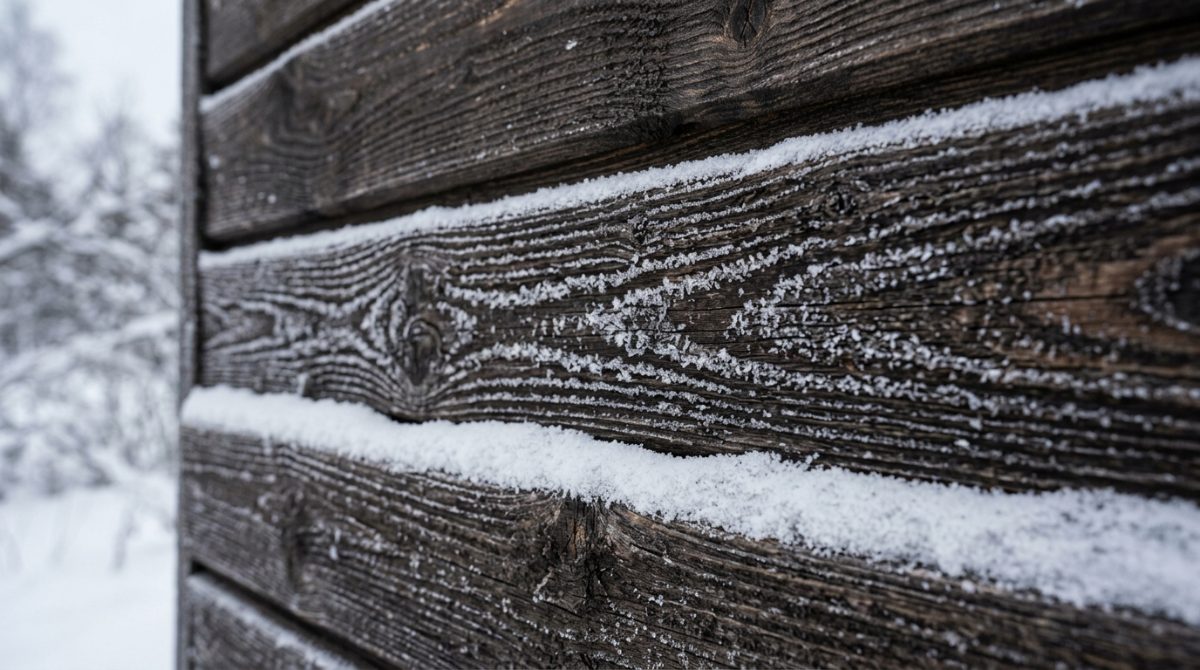
Cyclical freezing is a demanding process for exterior timber — water infiltrating the fibres expands when it freezes and disrupts the cellulose structure. Thermowood and Siberian larch have low equilibrium moisture content (5–8%), but we still recommend applying a penetrating oil or wax impregnation before winter (not film-forming varnishes — they trap moisture beneath the surface). Condensate from the cabin needs a clear drainage path — a blocked drain leads to floor damage when it freezes. Foundations must reach the local frost depth (80–120 cm in Slovakia), otherwise the structure will shift due to frost heave.
Surfaces around the sauna freeze in winter — we recommend galvanised-steel anti-slip strips or rubber non-slip mats at the entrance. The roof must be dimensioned for snow load per EN 1991-1-3 (sk = 1.0–2.5 kN/m² depending on altitude). The electrical installation must meet IEC 60364-7-703 with IP44 protection in damp zones. Recommended operating protocol: pre-heat for 60–90 minutes before use, verify the temperature with a thermometer (not just the controller), open the door briefly during use, and after finishing, let the cabin cool down with the door slightly open.
Related topics: Outdoor Sauna Price | Outdoor Sauna or Hot Tub


We're happy to help personally. Leave us your contact, or write or call us:
+421 940 916 815 info@luxurelax.sk